
How to Prepare Emotionally for IVF  

How to Prepare Emotionally for IVF  

How to Prepare Emotionally for IVF  

In vitro fertilisation (IVF) can be a life-changing experience for women dreaming of having a child, but it can also be emotionally demanding. Alongside the physical aspects of treatment, emotional preparation is just as important for managing expectations, navigating the process and protecting your mental wellbeing.

Here are some practical ways to care for your emotional health during IVF.  


Learn About the IVF Process

Understanding what IVF involves can help you manage your emotions more effectively. Knowledge reduces anxiety and fear of the unknown by creating a greater sense of control. Learn about the stages of treatment, likely timelines, possible outcomes and potential challenges. Speak openly with your fertility specialist, ask questions and seek reliable medical information.  

Being well informed can help you set realistic expectations and prepare for the emotional highs and lows that may come with treatment.  

Set Realistic Expectations

Unfortunately, IVF does not guarantee success. Outcomes vary depending on factors such as age, medical history and the underlying cause of infertility. It is important to stay hopeful while also remaining realistic. IVF may require more than one attempt, and emotional readiness for that possibility can help reduce the shock or disappointment if pregnancy is not achieved right away.  

Acknowledge Your Emotions

It is entirely normal to experience a wide range of emotions during IVF — hope, anticipation, anxiety, fear, disappointment or sadness. Try not to suppress these feelings. Instead, recognise them as a natural part of the process. Be patient and compassionate with yourself. Practices such as journalling or meditation may help you process what you are going through.  

Seek Support from People You Trust

Surround yourself with people who can offer emotional support. This may include your partner, close friends, family members or even online support communities. Fertility treatment can feel isolating, but sharing your experience with someone who understands or listens with empathy can bring real relief.  

If you feel comfortable, connecting with others who have gone through IVF can also help lighten the emotional burden.  

Keep Communication Open with Your Partner

If you are going through IVF as a couple, open and honest communication is essential. The uncertainty and emotional weight of treatment can place strain on a relationship. Try to talk regularly about how each of you feels, as well as your hopes, fears and expectations. Staying attentive to one another’s emotional needs can make the process feel more manageable.  

Couples counselling with a therapist experienced in fertility-related issues may also help you stay connected and supportive throughout treatment.  

Consider Professional Support

Working with a qualified psychotherapist or psychologist can be an excellent source of support during IVF. A professional experienced in fertility-related emotional challenges can offer coping strategies, stress-management techniques and a safe space to express difficult feelings. Do not hesitate to seek support if the process starts to feel overwhelming.  

Prioritise Self-Care

During IVF, it is especially important to make space for activities that help you feel calmer, more grounded and emotionally restored. Whether that is time in nature, yoga, reading, painting or being with loved ones, small moments of self-care can help reduce stress and remind you that your identity is bigger than treatment alone.  

Be Prepared for Uncertainty

One of the most difficult aspects of IVF is uncertainty. There is no way to predict the outcome with complete confidence, and waiting for results can intensify anxiety. Accepting that not everything is within your control can be an important part of building emotional resilience throughout the IVF journey.  

Give Yourself Permission to Pause

IVF can be physically and emotionally exhausting. If needed, allow yourself the flexibility to pause and recover. Taking time to rest and restore your mental and emotional energy is not a setback — it is a way of protecting your wellbeing and preventing burnout.  
Babinden – A Celebration of Women and Medicine  

Babinden – A Celebration of Women and Medicine  

Babinden – A Celebration of Women and Medicine  

Babinden, celebrated each year on 21 January, is one of Bulgaria’s most cherished traditional holidays. Rooted in long-standing customs, it is associated with care for women, childbirth and respect for the medical professionals who support mothers at one of the most important moments in life — the birth of a child.  

History of the Holiday

The origins of Babinden go back to earlier times, when people believed that certain women, known as “babas”, held special knowledge and played a key role in childbirth. These women were seen not only as helpers during labour, but also as guardians of the mother’s and baby’s wellbeing through ritual, experience and care.  

Over time, the meaning of the holiday evolved and became more closely associated with medicine, turning into a day of recognition for the professionals who work in this field.  

Meaning of the Celebration

At its heart, Babinden honours the women who are connected to childbirth in one way or another — traditional birth attendants, midwives, obstetricians and gynaecologists, and everyone who helps mothers and newborns.

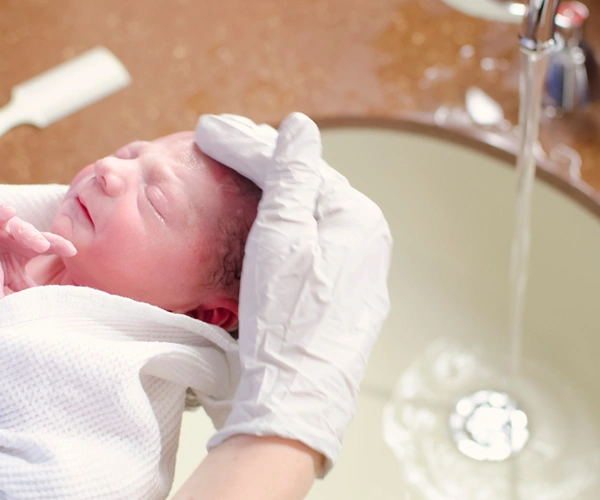
The holiday is traditionally marked by rituals, gestures of gratitude and symbolic gifts. One of the best-known customs is the ceremonial washing or blessing of the midwife or birth attendant, expressing respect for her work, dedication and care.

After the ritual, gifts are often exchanged. Traditionally, the honoured woman receives clothing or other offerings, while she in turn gives garments to the children she has helped bring into the world and ties a red-and-white thread with a silver coin to their wrists as a symbol of blessing and good fortune.

There are many local variations of these customs, but the spirit of the holiday has always been connected with joy, gratitude and celebration.

The Role of Midwives and Traditional Birth Attendants

Midwives and traditional birth attendants are central figures in Babinden. They represent female strength, knowledge and experience passed down through generations. In the past, especially in smaller villages and remote areas, they were often the only people available to assist women during childbirth when doctors and hospitals were not accessible.

Babinden Today

Today, Babinden is observed more as a celebration of midwives, obstetricians and gynaecologists than of traditional birth attendants in the historical sense. As medicine and healthcare have advanced, the role of the traditional “baba” in childbirth has diminished, but the holiday continues to honour the professionals who help bring new life into the world.

Although the customs have changed over time, the essence of the day remains the same: to express gratitude to the women and medical specialists whose care, knowledge and dedication support mothers and newborns.

Babinden is a holiday that brings together tradition, community and medicine. It is both a tribute to women’s role in society and healthcare, and a reminder of the care, wisdom and commitment that have always surrounded the arrival of new life.

The Role of the Endometrium in Successful Implantation  

The Role of the Endometrium in Successful Implantation  

The Role of the Endometrium in Successful Implantation  

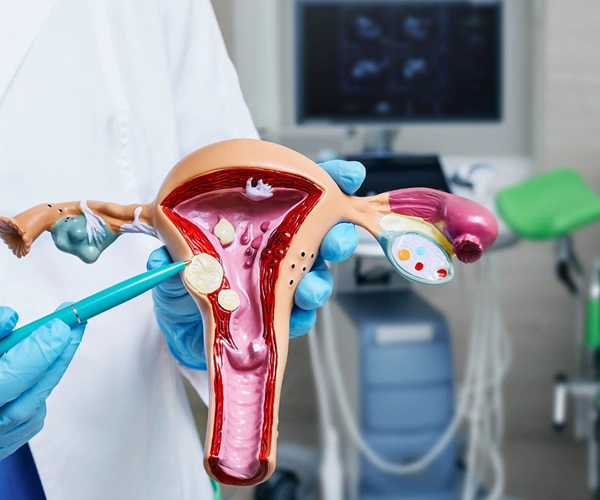
The endometrium, the inner lining of the uterus, plays a critical role in reproductive health, particularly in successful implantation — a key step in achieving pregnancy. This highly specialised tissue undergoes cyclical changes in response to hormonal signals, preparing the uterus to receive and nourish the embryo. The success or failure of implantation depends to a great extent on the quality and receptivity of the endometrium, making it an essential factor in early pregnancy.

Structure and Function

The endometrium consists of two distinct layers:

  • The functional layer, which goes through monthly cycles of growth, shedding and regeneration
  • The basal layer, which remains constant and serves as the source for regeneration of the functional layer

During the menstrual cycle, under the influence of oestrogen and progesterone, the endometrium passes through three key phases: the proliferative phase, the secretory phase and the menstrual phase. These phases are essential for creating the conditions needed for implantation.  

Proliferative Phase

During this phase, which takes place after menstruation, rising oestrogen levels stimulate thickening of the functional layer of the endometrium. This thickening is important because it creates a nutrient-rich environment with blood vessels and supportive tissue that can sustain the embryo. Oestrogen also promotes the growth of glands and vascular structures in the endometrium, preparing it for possible implantation.  

Secretory Phase

After ovulation, progesterone becomes the dominant hormone and initiates the secretory phase. During this stage, the glands of the endometrium begin to produce and secrete substances that create a favourable environment for the embryo. These secretions are rich in nutrients and growth factors that support the embryo in its earliest stages.  

The stromal cells of the endometrium also undergo a process called decidualisation, in which they change structurally and biochemically in order to support implantation. This phase is known as the “window of implantation” and usually occurs between days 20 and 24 of a 28-day menstrual cycle, when the endometrium is at its most receptive.  

Menstrual Phase

If implantation does not occur, progesterone and oestrogen levels fall, which leads to shedding of the functional layer of the endometrium during menstruation.  

Endometrial Receptivity and Implantation

Endometrial receptivity refers to the specific period during which the endometrium is most favourable for embryo implantation. Successful implantation requires synchrony between the embryo and the endometrium. A range of molecular markers, including cytokines, growth factors and adhesion molecules, participate in this complex process.  

One of the most important markers is the expression of integrins — cell adhesion molecules that help the embryo attach to the surface of the endometrium. In addition, factors such as leukaemia inhibitory factor (LIF) and vascular endothelial growth factor (VEGF) support embryo attachment and the development of a healthy blood supply.  

Implantation itself takes place in three stages: apposition, when the blastocyst first comes into contact with the endometrium; adhesion, when the attachment becomes stronger; and invasion, when the blastocyst embeds into the endometrial tissue. If the endometrium is not receptive, implantation will not occur, which can result in unsuccessful attempts to achieve pregnancy.  

Assessing Endometrial Receptivity

Several tests are used in modern reproductive medicine to evaluate whether the endometrium is in its optimal receptive phase for implantation. One of the most commonly used is the Endometrial Receptivity Array (ERA), which analyses gene expression in order to identify the exact timing of the implantation window.  

Other methods include endometrial biopsy to assess structure and function, as well as testing key markers such as progesterone and oestradiol. Ultrasound can also be used to measure endometrial thickness, helping clinicians assess whether the lining is ready for implantation. These investigations are especially useful in couples experiencing conception difficulties or during procedures such as IVF.  

What Can Cause Implantation Failure

Conditions such as a thin endometrium, endometriosis or chronic endometritis may impair the endometrium’s ability to support implantation. Reproductive tract infections, structural abnormalities and hormonal problems can also affect the development and function of the endometrial lining. In assisted reproductive technologies such as IVF, assessment and optimisation of endometrial receptivity are especially important for improving the chances of pregnancy.  

The role of the endometrium in successful implantation cannot be overstated. Its complex and dynamic nature, regulated by hormones and molecular signals, creates the environment in which the embryo can implant and develop. Understanding these functions is essential for addressing fertility challenges and improving outcomes in reproductive medicine.